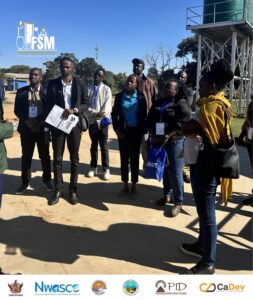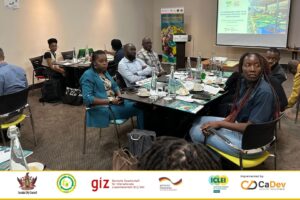
Following the field visit and technology demonstrations across Lusaka’s peri-urban communities, Day Two of Project Manager David Still‘s visit focused on reflecting on the progress of the FSM Action Research Project and discussing opportunities for the next phase of implementation.
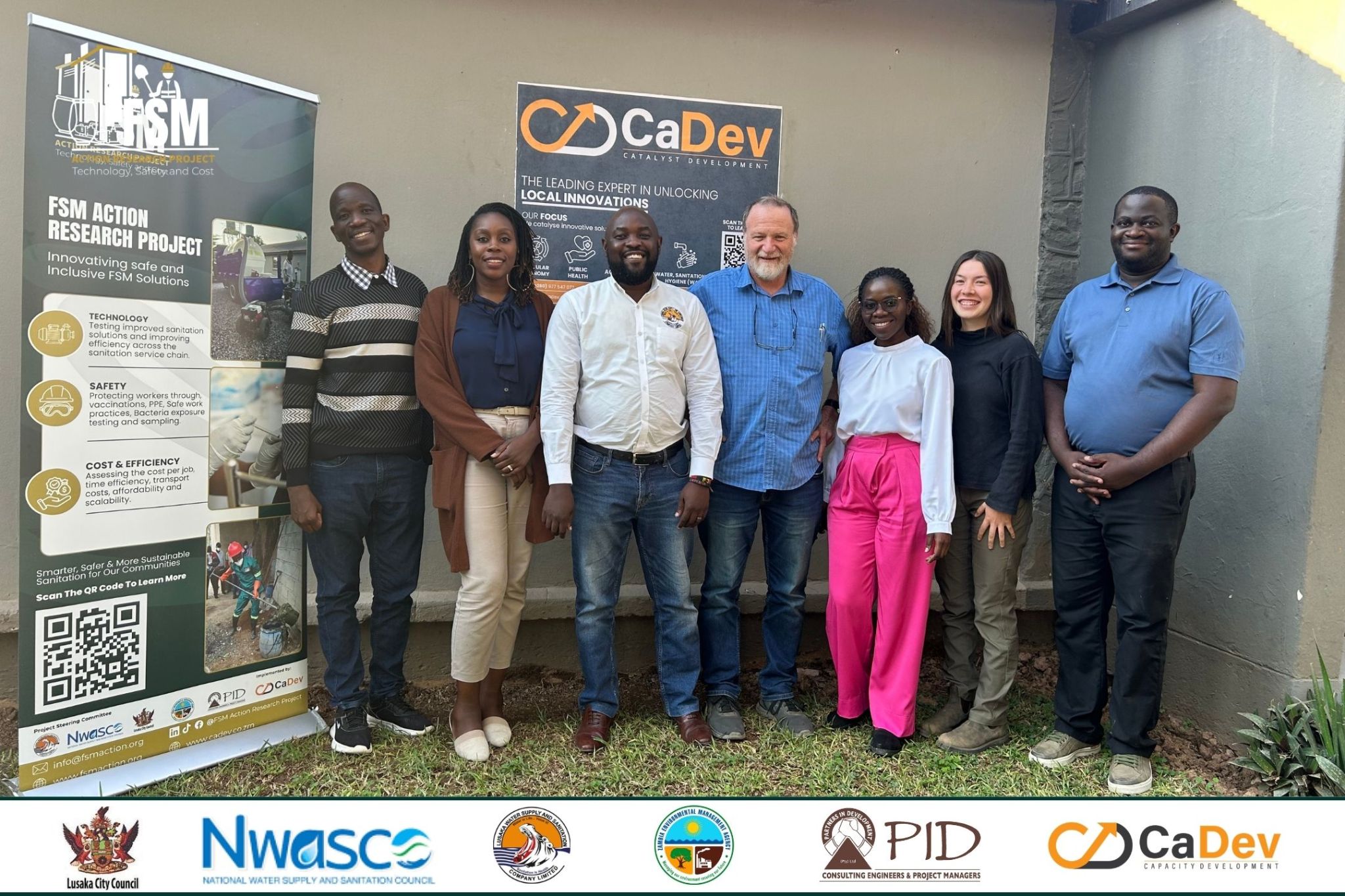
Hosted by CaDev_Catalyst Development, the meeting brought together Project Steering Committee members from Lusaka Water Supply and Sanitation Company (LWSC), including Wanzi Phiri, Systems Administrator and Evans Mambwe, FSM Plant Manager.
The meeting featured presentations from the CaDev team, with Karen Mwengwe sharing preliminary research findings on the project’s public health component, highlighting key insights into health and safety interventions and their role in improving faecal sludge management. Chaiwe Mushauko, who is coordinating the FSM Action Research Project in Lusaka, provided an update on overall project implementation, progress to date and the next steps as the project moves towards its results-sharing phase.
Discussions centred on health and safety, regulatory enforcement, infrastructure improvements at faecal sludge treatment plants, and the sustainability of sanitation service delivery. Stakeholders also explored how the proposed FSM Equipment Rental (Pay-Per-Use) Model could support upcoming scheduled desludging pilot activities, creating opportunities for sanitation entrepreneurs to access specialised equipment while strengthening service delivery.
The meeting reaffirmed the importance of translating research into action. Stakeholders discussed practical measures to strengthen the enforcement of existing health and safety standards, improve working conditions for pit emptiers, and ensure that the project’s findings contribute to long-term improvements in policy, operations and service delivery.
As the FSM Action Research Project progresses towards sharing its results, engagements such as these continue to strengthen collaboration among project partners and ensure that evidence generated through the research informs practical, scalable and sustainable sanitation solutions.